I am emailing a link of this to everyone on the class list every week. If you are not receiving these emails or want to have them sent to another email address feel free to email me at jpmccarthymaths@gmail.com and I will add you to the mailing list.

Important Tutorial Announcement

If you can’t make the tutorial on account of a clash please email me with the module code of the module the tutorial is clashing with.

Question 13 (c) from Tutorial

Solution: We say that y is eventually fixed point of g if some (finite) iterate of y, say g^{N}(x) is a fixed point.

Now suppose that y is eventually fixed, at say x_f=g^N(y) so that the orbit of y is

\text{orb}(y)=\{y,g(y),\dots,g^N(y)=x_f,x_f,x_f,\dots\}.

Now by part (b) the orbit of x_f under g^{-1} is

\text{orb}(x_f)=\{x_f,x_f,\dots,y\}.

However by part (a), x_f is also a fixed point for g^{-1} so it follows that

\text{orb}(x_f,)=\{x_f,x_f,\dots,x_f\}\Rightarrow x_f=y,

that is y is a fixed point of g \bullet

Week 3

On Monday we proved two facts about periodic orbits (on the  bottom of p.12 and the top of p.13 in the course notes)

On Wednesday we learnt how to find the period-2 points of a polynomial mapping. Finding periodic points, say period-2 points means finding points x\in S such that if we apply the iterator function twice, then we get back to x:

f(f(x))=f^2(x)=x.

Solving this equation is not necessarily that easy but we proved that if f:S\rightarrow S, then the fixed-point factor-theorem applies: f(x)-x divides into f^2(x)-x and this helps immensely.

We also learnt how to find eventually fixed points.

Week 4

In Week 4 we will study  attracting fixed points.

Exercises

I have emailed ye a copy of the exercises and ye should be able to look at questions

  • 10, 12(17), 16 – 18, 20 – 22
  • 13 is hard
  • 14 & 15 were done in Monday’s lecture

As there are a lot of questions it might make sense to allocate so much time and say do (A)s first, then (B)s then (C)s or whatever.

Test Postponement and Other CA Information

To give ye adequate time to prepare, the test will take place on February 12 in Week 6. Everything up to but not including section 3.4 in the typeset notes is examinable: we will have this covered by Februaray 3 but probably January 29. I have emailed ye a copy of a sample test.

The Concept MCQ will still take place in Week 8. I have decided not to give ye a sample and I might make it a half hour test rather than an hour. The homework will be given to you towards the end of the semester and I will give ye three weeks to do it. It will probably be on complex numbers and won’t be as long as last year’s homework.

You will be given marks for the best two out of Test, Concept MCQ and Homework.

Math.Stack Exchange

If you find yourself stuck and for some reason feel unable to ask me the question you could do worse than go to the excellent site math.stackexchange.com. If you are nice and polite, and show due deference to these principles you will find that your questions are answered promptly. For example this question about where the OP didn’t understand why roots of f(x)-x are roots of f^2(x)-x.

I am emailing a link of this to everyone on the class list every week. If you are not receiving these emails or want to have them sent to another email address feel free to email me at jpmccarthymaths@gmail.com and I will add you to the mailing list.

Course Notes

Have been emailed to you.

Weeks 1 & 2

In the first two weeks we have defined a dynamical system (S,f). It is a set of states S together with an iterator function/ rule of evolution f:S\rightarrow S. We take an initial state/ seed point x_o\in S and examine the orbit of x_0:

\displaystyle \text{orb}(x_0)=\{x_0,x_1,x_2,x_3,\dots\},

where the states x_1,x_2,\dots are produced iteratively by the iterator function:

x_1=f(x_0) and x_n=f(x_{n-1}).

We looked at some examples of dynamical systems (note there was a small error in the regular savings example but that is not too important).

We studied fixed points. These are states x_f\in S such that if an orbit of a point `hits’ x_f then the orbit will remain fixed at x_f. Thus fixed points are points with the property that

f(x_f)=x_f.

So the fixed points of a function f:S\rightarrow S are points such that the output of the function equals the input.

Similarly periodic points are states/ points x\in S such that if an orbit of a point `hits’ x then the orbit will keep returning to x after, say N iterations of f; that is f^N(x)=x:

x_0,x_1,x_2,\dots,x,f(x),\dots,f^{N-1}(x),x,f(x),\dots,f^{N-1}(x),x,f(x),\dots.

We also noted that a period-2 point would also be period-6 for example:

\{\alpha,\beta,\alpha,\beta,\alpha,\beta,\alpha,\beta,\alpha,\beta,\dots\}

Here \alpha is period-6 but the lowest period is two. We call this the prime period of \alpha.

Finding periodic points, say period-2 points means finding points x\in S such that if we apply the iterator function twice, then we get back to x:

f(f(x))=f^2(x)=x.

We will look at this problem next week.

Week 3

In Week 3 we will study periodic points in more depth and introduce the idea of an attracting fixed point.

Exercises

I have emailed ye a copy of the exercises and ye should be able to look at questions 1-9 and 11 for next week’s tutorial.

Test

The test will take place on February 5. Everything up to but not including section 3.4 in the typeset notes is examinable: we should have this covered by January 27. I have emailed ye a copy of a sample test.

Math.Stack Exchange

If you find yourself stuck and for some reason feel unable to ask me the question you could do worse than go to the excellent site math.stackexchange.com. If you are nice and polite, and show due deference to these principles you will find that your questions are answered promptly. For example this question about fixed points.

I am emailing a link of this to everyone on the class list every week. If you are not receiving these emails or want to have them sent to another email address feel free to email me at jpmccarthymaths@gmail.com and I will add you to the mailing list.

Course Notes

Finally completed: here.

Week 12

In Week 12 we will finished the module by looking at Hypothesis Testing and Control Charts.

Week 13: Review Week

I will be available to any and all students (Groups A & B) at the following (usual) times and (usual) venues:

  • Review Lecture Monday 09:00 B212
  • Review Lecture Tuesday 14:00 B212
  • Review Lecture Wednesday 11:00 B212
  • Review Tutorial Thursday 15:00 B228

The Review Lectures will be conducted as follows (from Monday 9 December)

  1. Students can ask any question and I will answer it on the whiteboard. If we run out of questions
  2. I will start going through the Autumn 2013 paper (which was given out in the Thursday 28 December tutorial). If we finish this paper
  3. I will help ye one to one.

The Review Tutorials will be conducted as follows

  1. Students can ask any question and I will answer it on the whiteboard. If we run out of questions
  2. I will help ye one to one

Academic Learning Centre

I would urge anyone having any problems with material that isn’t being addressed in the tutorials to use the Academic Learning Centre. As you can see the timetable is quite generous. You will get best results if you come to the helpers there with specific questions.

Math.Stack Exchange

If you find yourself stuck and for some reason feel unable to ask me the question you could do worse than go to the excellent site math.stackexchange.com. If you are nice and polite, and show due deference to these principles you will find that your questions are answered promptly. For example What is a Confidence Interval?

I am emailing a link of this to everyone on the class list every week. If you are not receiving these emails or want to have them sent to another email address feel free to email me at jpmccarthymaths@gmail.com and I will add you to the mailing list.

Week 12

In Week 12 we spoke about differential equations. Most of next year’s maths will be taken up studying these ubiquitous engineering maths equations.

Week 13: Review Week

I will be available to any and all students (Groups A & B) at the following (usual) times and (usual) venues:

  • Review Lecture Monday 16:00 B263
  • Review Lecture Tuesday 09:00 B149
  • Review Tutorial Tuesday 17:00 B165
  • Review Lecture Thursday 11:00 B188
  • Review Tutorial Friday 09:00 B188

The Review Lectures will be conducted as follows (from Monday 9 December)

  1. Students can ask any question and I will answer it on the whiteboard. If we run out of questions
  2. I will start going through the Autumn 2013 paper (which was given out in Thursday 28 December Lecture). If we finish this paper
  3. I will help ye one to one.

The Review Tutorials will be conducted as follows

  1. Students can ask any question and I will answer it on the whiteboard. If we run out of questions
  2. I will help ye one to one

Additional Notes

Find a possibly useful reference here.

Academic Learning Centre

Those in danger of failing need to use the Academic Learning Centre. As you can see the timetable is quite generous. You will get best results if you come to the helpers there with specific questions.

Math.Stack Exchange

If you find yourself stuck and for some reason feel unable to ask me the question you could do worse than go to the excellent site math.stackexchange.com. If you are nice and polite, and show due deference to these principles you will find that your questions are answered promptly. For example this question about why we need to talk about the root-mean-square value of a function.

I am emailing a link of this to everyone on the class list every week. If you are not receiving these emails or want to have them sent to another email address feel free to email me at jpmccarthymaths@gmail.com and I will add you to the mailing list.

Assessment 5

This Wednesday. See your CIT Blackboard for the latest and definitive information.

Week 12

In Week 12 we spoke about graphing (linear) data and what questions this can answer.

Week 13: Review Week

I will be available to any and all students (DCOM1A & 1B) at the following (usual) times and (usual) venues to help and answer questions:

  • Monday 10:00 B217
  • Monday 12:00 F1. 3
  • Monday 14:00 B143
  • Tuesday 10:00 B217
  • Tuesday 13:00 B165
  • Wednesday 14:00 B217

Additional Notes

Find a possibly useful reference here.

Academic Learning Centre

I would urge anyone having any problems with material that isn’t being addressed in the tutorials to use the Academic Learning Centre. As you can see the timetable is quite generous. You will get best results if you come to the helpers there with specific questions. The few of us who are in trouble of failing really need to visit the ALC team ASAP.

Math.Stack Exchange

If you find yourself stuck and for some reason feel unable to ask me the question you could do worse than go to the excellent site math.stackexchange.com. If you are nice and polite, and show due deference to these principles you will find that your questions are answered promptly. For example this question about vertical lines.

I am emailing a link of this to everyone on the class list every week. If you are not receiving these emails or want to have them sent to another email address feel free to email me at jpmccarthymaths@gmail.com and I will add you to the mailing list.

Test 2 A Probability Solutions

The CFO of a large civil engineering company is concerned about the number of sick days taken by its 2,000 construction workers and hires a business analyst to monitor the situation.

Question 1(a)

Historic records suggest that workers take an average of 5 sick days out of 220. The analyst assumes that the number of days missed in a year of 220 days has a Binomial Distribution. Calculate the probability that

Let X be the number of sick days that a worker takes in a year. The question says that  X is binomially distributed. The number of trials,  n, is 220 and the probability of a sick day… well if it is 5 out of 220 then it is  \displaystyle \frac{5}{220}=\frac{1}{44} and we have that  X\sim \text{Bin}[220,1/44].

i. a worker takes three or more sick days in a year

We are looking for for the probability that X is three or more

\mathbb{P}[X\geq 3]=\mathbb{P}[\text{not-}(X=0\text{ or }X=1\text{ or }X=2)]

=1-\mathbb{P}[X=X=0\text{ or }X=1\text{ or }X=2]

=1-(\mathbb{P}[X=0]+\mathbb{P}[X=1]+\mathbb{P}[X=2])

\displaystyle 1-\left({220\choose 0}\left(\frac{1}{44}\right)^0\left(\frac{43}{44}\right)^{220}+{220\choose 1}\left(\frac{1}{44}\right)^1\left(\frac{43}{44}\right)^{219}\right.

\displaystyle \left.+{220\choose 2}\left(\frac{1}{44}\right)^2\left(\frac{43}{44}\right)^{218}\right)

=1-(0.0063602+0.032541+0.08286)=0.8782

ii. a worker takes no sick days in a year.

We are looking for the probability that X is zero. We have actually found this above

\displaystyle \mathbb{P}[X=0]=0.00636.

Read the rest of this entry »

I am emailing a link of this to everyone on the class list every week. If you are not receiving these emails or want to have them sent to another email address feel free to email me at jpmccarthymaths@gmail.com and I will add you to the mailing list.

Week 11

In Week 11 about the applications of integration to volume & work as well as to the mean & root-mean-square values of a function. Essentially these are four formulae:

Volume of Revolution \displaystyle =V=\int_a^b\pi [f(x)]^2\,dx (in tables)

Work \displaystyle =W=\int_{a}^b F(x)\,dx (in tables)

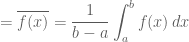
Mean Value of a Function \displaystyle =\overline{f(x)}=\frac{1}{b-a}\int_a^bf(x)\,dx (not in tables nor exam paper*)

Root-Mean-Square Value of a Function \displaystyle =f_{\text{rms}}=\sqrt{\frac{1}{b-a}\int_a^b[f(x)]^2\,dx} (not in tables nor exam paper*)

*I will get onto you very soon about this — they might be put on the exam paper.

Week 12

In Week 12 we will talk about differential equations. Most of next year’s maths will be taken up studying these ubiquitous engineering maths equations.

As of this moment there will be NO class on Friday 6 December. There is a small chance that I will make myself available at this time… ye will get an email about this before Tuesday.

Week 13: Review Week

I will be available to any and all students (Groups A & B) at the following (usual) times and (usual) venues:

  • Review Lecture Monday 16:00 B263
  • Review Lecture Tuesday 09:00 B149
  • Review Tutorial Tuesday 17:00 B165
  • Review Lecture Thursday 11:00 B188
  • Review Tutorial Friday 09:00 B188

The Review Lectures will be conducted as follows (from Monday 9 December)

  1. Students can ask any question and I will answer it on the whiteboard. If we run out of questions
  2. I will start going through the Autumn 2013 paper (which was given out in Thursday 28 December Lecture). If we finish this paper
  3. I will help ye one to one.

The Review Tutorials will be conducted as follows

  1. Students can ask any question and I will answer it on the whiteboard. If we run out of questions
  2. I will help ye one to one

Additional Notes

Find a possibly useful reference here.

Academic Learning Centre

Those in danger of failing need to use the Academic Learning Centre. As you can see the timetable is quite generous. You will get best results if you come to the helpers there with specific questions.

Math.Stack Exchange

If you find yourself stuck and for some reason feel unable to ask me the question you could do worse than go to the excellent site math.stackexchange.com. If you are nice and polite, and show due deference to these principles you will find that your questions are answered promptly. For example this question about why we need to talk about the root-mean-square value of a function.

I am emailing a link of this to everyone on the class list every week. If you are not receiving these emails or want to have them sent to another email address feel free to email me at jpmccarthymaths@gmail.com and I will add you to the mailing list.

BUY SOME GRAPH PAPER FOR THIS WEEK!

Assessment 4 Results

Will not be released. Instead you will get your final MATH6000 mark with the rest of your Semester 1 Results.

Week 11

In Week 11 we spoke about functions and coordinate geometry.

Week 12

In Week 12 we will talk about graphing (linear) data and what questions this can answer.

Week 13: Review Week

I will be available to any and all students (DCOM1A & 1B) at the following (usual) times and (usual) venues to help and answer questions:

  • Monday 10:00 B217
  • Monday 12:00 F1. 3
  • Monday 14:00 B143
  • Tuesday 10:00 B217
  • Tuesday 13:00 B165
  • Wednesday 14:00 B217

Additional Notes

Find a possibly useful reference here.

Academic Learning Centre

I would urge anyone having any problems with material that isn’t being addressed in the tutorials to use the Academic Learning Centre. As you can see the timetable is quite generous. You will get best results if you come to the helpers there with specific questions. The few of us who are in trouble of failing really need to visit the ALC team ASAP.

Math.Stack Exchange

If you find yourself stuck and for some reason feel unable to ask me the question you could do worse than go to the excellent site math.stackexchange.com. If you are nice and polite, and show due deference to these principles you will find that your questions are answered promptly. For example this question about vertical lines.

I am emailing a link of this to everyone on the class list every week. If you are not receiving these emails or want to have them sent to another email address feel free to email me at jpmccarthymaths@gmail.com and I will add you to the mailing list.

Test 2: Notice and Sample

Test 2 will take place on Thursday 28 November at 17:00, in B228. Please find a sample to give you an idea of the format.  The test will also come with a set of tables and formulae which is at the back of the “Normal Distribution” handout.

Course Notes

Finally completed: here.

Week 10

In Week 10 we started to look at the Poisson and Normal distributions.

Week 11

In Week 11 we will look at Sampling Theory and start Hypothesis Testing.

Academic Learning Centre

I would urge anyone having any problems with material that isn’t being addressed in the tutorials to use the Academic Learning Centre. As you can see the timetable is quite generous. You will get best results if you come to the helpers there with specific questions.

Math.Stack Exchange

If you find yourself stuck and for some reason feel unable to ask me the question you could do worse than go to the excellent site math.stackexchange.com. If you are nice and polite, and show due deference to these principles you will find that your questions are answered promptly. For example this deep question about the normal distribution.

I am emailing a link of this to everyone on the class list every week. If you are not receiving these emails or want to have them sent to another email address feel free to email me at jpmccarthymaths@gmail.com and I will add you to the mailing list.

Test 2 Results

To be honest I haven’t started correcting. I will have these before Friday.

Week 10

In Week 10 spoke about partial fractions and how to calculate areas using integration.

Week 11

In Week 11 we will talk about volumes and work using integration.

Additional Notes

Find a possibly useful reference here.

Academic Learning Centre

I would urge anyone having any problems with material that isn’t being addressed in the tutorials to use the Academic Learning Centre. As you can see the timetable is quite generous. You will get best results if you come to the helpers there with specific questions.

Math.Stack Exchange

If you find yourself stuck and for some reason feel unable to ask me the question you could do worse than go to the excellent site math.stackexchange.com. If you are nice and polite, and show due deference to these principles you will find that your questions are answered promptly. For example one person wanted to know where the area of a circle A=\pi r^2 cam from.