
Classical Warm-up
Let 



This algebra is commutative, but we will use some non-commutative algebraic analogues. Let 


When choosing a permutation at random what is the probability that it sends 
![\displaystyle \mathbb{P}[\pi(1)=1]=\pi(\mathbf{1}_{1\to 1})=\frac{1}{N}](https://s0.wp.com/latex.php?latex=%5Cdisplaystyle+%5Cmathbb%7BP%7D%5B%5Cpi%281%29%3D1%5D%3D%5Cpi%28%5Cmathbf%7B1%7D_%7B1%5Cto+1%7D%29%3D%5Cfrac%7B1%7D%7BN%7D&bg=ffffff&fg=545454&s=0&c=20201002)
Once this has been observed, there is a conditioning of the state 

The state was given by 
Consider a subset 
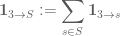
This is an observable, which basically asks of a permutation, do you map three into 
What is the probability that a random permutation maps three into
We find, with a fairly elementary calculation that the answer to this question is:
![\displaystyle \mathbb{P}[\pi_{1\to 1}(3)\in S]=\frac{|S|}{N-1}](https://s0.wp.com/latex.php?latex=%5Cdisplaystyle+%5Cmathbb%7BP%7D%5B%5Cpi_%7B1%5Cto+1%7D%283%29%5Cin+S%5D%3D%5Cfrac%7B%7CS%7C%7D%7BN-1%7D&bg=ffffff&fg=545454&s=0&c=20201002)
If 


What is the probability that after seeing 

![\displaystyle \mathbb{P}[\nu(2)=2]=\frac{1}{N-2}](https://s0.wp.com/latex.php?latex=%5Cdisplaystyle+%5Cmathbb%7BP%7D%5B%5Cnu%282%29%3D2%5D%3D%5Cfrac%7B1%7D%7BN-2%7D&bg=ffffff&fg=545454&s=0&c=20201002)
Therefore, where 
![\displaystyle \mathbb{P}[(\pi(2)=2)\succ (\pi(3)\in S)\succ(\pi(1)=1)]](https://s0.wp.com/latex.php?latex=%5Cdisplaystyle+%5Cmathbb%7BP%7D%5B%28%5Cpi%282%29%3D2%29%5Csucc+%28%5Cpi%283%29%5Cin+S%29%5Csucc%28%5Cpi%281%29%3D1%29%5D&bg=ffffff&fg=545454&s=0&c=20201002)

Now let us ask a ridiculous question. What was the probability that 
![\displaystyle \mathbb{P}[\pi_{1\to 1}(1)=1]=\dfrac{\pi(\mathbf{1}_{1\to 1}\mathbf{1}_{1\to 1}\mathbf{1}_{1\to 1})}{\pi(\mathbf{1}_{1\to 1})}=1](https://s0.wp.com/latex.php?latex=%5Cdisplaystyle+%5Cmathbb%7BP%7D%5B%5Cpi_%7B1%5Cto+1%7D%281%29%3D1%5D%3D%5Cdfrac%7B%5Cpi%28%5Cmathbf%7B1%7D_%7B1%5Cto+1%7D%5Cmathbf%7B1%7D_%7B1%5Cto+1%7D%5Cmathbf%7B1%7D_%7B1%5Cto+1%7D%29%7D%7B%5Cpi%28%5Cmathbf%7B1%7D_%7B1%5Cto+1%7D%29%7D%3D1&bg=ffffff&fg=545454&s=0&c=20201002)
Of course the answer is zero. Can we actually see it in the above framework: well, yes, because the algebra of functions is commutative. You end up with evaluating a state at

but commutativity sees 

We don’t have to do state conditioning and multiplication to calculate the probability that a random permutation maps one to one, then maps three into 

Let us remark that this probability is increasing in 

Let’s Go Quantum
In the case of quantum permutations, so talking 


![\displaystyle \mathbb{P}[(h(1)=2)\succ(h(3)=3)\succ (h(1=1))]=\frac{N-3}{q(N)}](https://s0.wp.com/latex.php?latex=%5Cdisplaystyle+%5Cmathbb%7BP%7D%5B%28h%281%29%3D2%29%5Csucc%28h%283%29%3D3%29%5Csucc+%28h%281%3D1%29%29%5D%3D%5Cfrac%7BN-3%7D%7Bq%28N%29%7D&bg=ffffff&fg=545454&s=0&c=20201002)
Anyway, the quantum versions of the 

![\mathbb{P}[(h(2)=2)\succ (h(3)\in S)\succ (h(1)=1)]:=h(|u_{22}u_{S,3}u_{11}|^2)](https://s0.wp.com/latex.php?latex=%5Cmathbb%7BP%7D%5B%28h%282%29%3D2%29%5Csucc+%28h%283%29%5Cin+S%29%5Csucc+%28h%281%29%3D1%29%5D%3A%3Dh%28%7Cu_%7B22%7Du_%7BS%2C3%7Du_%7B11%7D%7C%5E2%29&bg=ffffff&fg=545454&s=0&c=20201002)
where 
![\displaystyle \mathbb{P}[(h(2)=2)\succ (h(3)\in S)\succ (h(1)=1)]=\frac{|S|(N^2-5N+5+|S|)}{(N-2)q(N)}](https://s0.wp.com/latex.php?latex=%5Cdisplaystyle+%5Cmathbb%7BP%7D%5B%28h%282%29%3D2%29%5Csucc+%28h%283%29%5Cin+S%29%5Csucc+%28h%281%29%3D1%29%5D%3D%5Cfrac%7B%7CS%7C%28N%5E2-5N%2B5%2B%7CS%7C%29%7D%7B%28N-2%29q%28N%29%7D&bg=ffffff&fg=545454&s=0&c=20201002)
This is also increasing in 
This quantity is related to the classical probability above, and there are asymptotic similarities. Writing 


![\displaystyle \mathbb{P}[(h(2)=2)\succ (h(3)\in S)\succ (h(1)=1)]](https://s0.wp.com/latex.php?latex=%5Cdisplaystyle+%5Cmathbb%7BP%7D%5B%28h%282%29%3D2%29%5Csucc+%28h%283%29%5Cin+S%29%5Csucc+%28h%281%29%3D1%29%5D&bg=ffffff&fg=545454&s=0&c=20201002)
![\displaystyle=\mathbb{P}[(\pi(2)=2)\succ (\pi(3)\in S)\succ(\pi(1)=1)]\cdot\left[1-\frac{|S^c|+1}{q(N)}\right]](https://s0.wp.com/latex.php?latex=%5Cdisplaystyle%3D%5Cmathbb%7BP%7D%5B%28%5Cpi%282%29%3D2%29%5Csucc+%28%5Cpi%283%29%5Cin+S%29%5Csucc%28%5Cpi%281%29%3D1%29%5D%5Ccdot%5Cleft%5B1-%5Cfrac%7B%7CS%5Ec%7C%2B1%7D%7Bq%28N%29%7D%5Cright%5D&bg=ffffff&fg=545454&s=0&c=20201002)
I guess this also says, the larger
A twist
What if instead of looking at 


From our classical intuition, we would probably just expect, well, the same really. The larger the value of 


![\displaystyle \mathbb{P}[(h(1)=2)\succ (h(3)\in S)\succ (h(1)=1)]=\dfrac{|S|(N-2-|S|)}{q(N)}](https://s0.wp.com/latex.php?latex=%5Cdisplaystyle+%5Cmathbb%7BP%7D%5B%28h%281%29%3D2%29%5Csucc+%28h%283%29%5Cin+S%29%5Csucc+%28h%281%29%3D1%29%5D%3D%5Cdfrac%7B%7CS%7C%28N-2-%7CS%7C%29%7D%7Bq%28N%29%7D&bg=ffffff&fg=545454&s=0&c=20201002)
Proof: Consider 

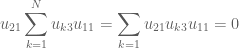
Like in the classical case, by definition here, 

Now, classically, this is just a sum of zero terms equal to zero, but not in the quantum world where we have these 

Now take the 

This yields the strange probability above. I think any intuition I have for this would be very much post-hoc. I think I will just let it hang there as something weird, cool and mysterious about quantum permutations…


 J.P. McCarthy: Math Page
Leave a comment
Comments feed for this article