
You are currently browsing the category archive for the ‘Research Updates’ category.
Abstract
Necessary and sufficient conditions for a Markov chain to be ergodic are that the chain is irreducible and aperiodic. This result is manifest in the case of random walks on finite groups by a statement about the support of the driving probability: a random walk on a finite group is ergodic if and only if the support is not concentrated on a proper subgroup, nor on a coset of a proper normal subgroup. The study of random walks on finite groups extends naturally to the study of random walks on finite quantum groups, where a state on the algebra of functions plays the role of the driving probability. Necessary and sufficient conditions for ergodicity of a random walk on a finite quantum group are given on the support projection of the driving state.
Link to journal here.
In the case of a finite classical group 



exhibits a periodicity because

This shows that a necessary condition for ergodicity of a random walk on a finite classical group 
I had hoped that something similar might hold for the case of random walks on finite quantum groups but alas I think I have found a barrier.
Diaconis–Shahshahani Upper Bound Lemma for Finite Quantum Groups, Journal of Fourier Analysis and Applications, doi: 10.1007/s00041-019-09670-4 (earlier preprint available here)
Abstract
A central tool in the study of ergodic random walks on finite groups is the Upper Bound Lemma of Diaconis and Shahshahani. The Upper Bound Lemma uses Fourier analysis on the group to generate upper bounds for the distance to random and thus can be used to determine convergence rates for ergodic walks. The Fourier analysis of quantum groups is remarkably similar to that of classical groups. This allows for a generalisation of the Upper Bound Lemma to an Upper Bound Lemma for finite quantum groups. The Upper Bound Lemma is used to study the convergence of ergodic random walks on the dual group 
Slides of a talk given at the Irish Mathematical Society 2018 Meeting at University College Dublin, August 2018.
Abstract Four generalisations are used to illustrate the topic. The generalisation from finite “classical” groups to finite quantum groups is motivated using the language of functors (“classical” in this context meaning that the algebra of functions on the group is commutative). The generalisation from random walks on finite “classical” groups to random walks on finite quantum groups is given, as is the generalisation of total variation distance to the quantum case. Finally, a central tool in the study of random walks on finite “classical” groups is the Upper Bound Lemma of Diaconis & Shahshahani, and a generalisation of this machinery is used to find convergence rates of random walks on finite quantum groups.
Amaury Freslon has put a pre-print on the arXiv, Cut-off phenomenon for random walks on free orthogonal quantum groups, that answers so many of these questions, some of which appeared as natural further problems in my PhD thesis.
It really is a fantastic paper and I am delighted to see my PhD work cited: it appears that while I may have taken some of the low hanging fruit, Amaury has really extended these ideas and has developed some fantastic examples: all beyond my current tools.
This pre-print gives me great impetus to draft a pre-print of my PhD work, hopefully for publication. I am committed to improving my results and presentation, and Amaury’s paper certainly provides some inspiration is this direction.
As things stand I do not have to tools to develop results as good as Amaury’s. Therefore I am trying to develop my understanding of compact quantum groups and their representation theory. Afterwards I can hopefully study some of the remaining further problems mentioned in the thesis.
As suggested by Uwe Franz, representation theoretic methods (such as presented by Diaconis (1988) for the classical case), might be useful for analysing random walks on quantum homogeneous spaces.
Slides of a talk given at the Topological Quantum Groups and Harmonic Analysis workshop at Seoul National University, May 2017.
Abstract A central tool in the study of ergodic random walks on finite groups is the Upper Bound Lemma of Diaconis & Shahshahani. The Upper Bound Lemma uses the representation theory of the group to generate upper bounds for the distance to random and thus can be used to determine convergence rates for ergodic walks. These ideas are generalised to the case of finite quantum groups.
After a long time I have finally completed my PhD studies when I handed in my hardbound thesis (a copy of which you can see here).
It was a very long road but thankfully now the pressure is lifted and I can enjoy my study of quantum groups and random walks thereon for many years to come.
Let 


Representation Theory
A representation of 

The dimension of 


One property of these that we will use it that 
Two representations 



We can show that every representation is equivalent to a unitary representation.
Timmermann shows that if 


Given a representation 


so that the matrix elements of 

Timmermann shows that the matrix elements have the following orthogonality relations:
- If
and
are inequivalent then
for all
and
.
- If
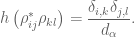
This second relation is more complicated without the 

![\left[F\right]_{ij}=\delta_{i,j}](https://s0.wp.com/latex.php?latex=%5Cleft%5BF%5Cright%5D_%7Bij%7D%3D%5Cdelta_%7Bi%2Cj%7D&bg=ffffff&fg=545454&s=0&c=20201002)

Denote by 


Diaconis-Van Daele Fourier Theory
The following runs a thread through what I’ve looked at over the past year: Progression Report.
I have continued to work through Murphy http://books.google.com/books?id=emNvQgAACAAJ&dq=gerald+murphy+c*+algebras+and+operator+theory&h
I managed to get through two sections last week: Compact Hilbert Space Operators and The Spectral Theorem. I also have 9 of 12 chapter 2 exercises completed. I have been writing my study up here and this is proving fruitful on three counts:
- I can put questions in red for my supervisor to see
- I am not happy putting up something on this page that I haven’t justified to myself. This means I have to fill in some extra steps (in blue)
- I should have a nice set of notes to peruse should I need them
Unfortunately this week will be mostly concerned with preparing lectures for two modules that I will be lecturing in CIT:


Recent Comments