
You are currently browsing the category archive for the ‘Quantum Groups’ category.
BCRI Mini-Symposium: Noncommutative Probability & Quantum Information
Monday, 10th October 2022 from 12:00 to 15:00
Organizers: Claus Koestler (UCC), Stephen Wills (UCC)
SPEAKER: J.P. McCarthy (Munster Technological University)
TITLE: The Kawada-Itô theorem for finite quantum groups.
ABSTRACT: Necessary and sufficient conditions for a Markov chain to be ergodic are that the chain is irreducible and aperiodic. This result is manifest in the case of random walks on finite groups by a statement about the support of the driving probability: a random walk on a finite group is ergodic if and only if the support is not concentrated on a proper subgroup, nor on a coset of a proper normal subgroup. The study of random walks on finite groups extends naturally to the study of random walks on compact quantum groups, where a state on the algebra of functions plays the role of the driving probability. A random walk on a compact quantum group can fail to be irreducible without being concentrated on a proper quantum subgroup. In this talk we will explore this phenomenon. Time allowing, we will talk about periodicity, and as a conclusion, I give necessary and sufficient conditions for ergodicity of a random walk on a finite quantum group in terms of the support projection of the driving state.
In the end the talk (below) didn’t quite match the abstract.
Quantum Group Seminar, Monday 24 January, 2022.
Abstract: A classical theorem of Frucht states that every finite group is the automorphism group of a finite graph. Is every quantum permutation group the quantum automorphism group of a finite graph? In this talk we will answer this question with the help of orbits and orbitals.
This talk is based on joint work with Teo Banica.
This article has been accepted to Expositiones Mathematicae.
Abstract
In this exposition of quantum permutation groups, an alternative to the ‘Gelfand picture’ of compact quantum groups is proposed. This point of view is inspired by algebraic quantum mechanics and interprets the states of an algebra of continuous functions on a quantum permutation group as quantum permutations. This interpretation allows talk of an element of a quantum permutation group, and allows a clear understanding of the difference between deterministic, random, and quantum permutations. The interpretation is illustrated by various quantum permutation group phenomena.
Anyone clicking here before March 04, 2022 will be taken directly to the latest version of the article on ScienceDirect, which they are welcome to read or download. No sign up, registration or fees are required.
Abstract
A classical theorem of Frucht states that any finite group appears as the automorphism group of a finite graph. In the quantum setting the problem is to understand the structure of the compact quantum groups which can appear as quantum automorphism groups of finite graphs. We discuss here this question, notably with a number of negative results.
with Teo Banica, Glasgow Math J., to appear. Arxiv link here.
Abstract
An exposition of quantum permutation groups where an alternative to the ‘Gelfand picture’ of compact quantum groups is proposed. This point of view is inspired by algebraic quantum mechanics and posits that states on the algebra of continuous functions on a quantum permutation group can be interpreted as quantum permutations. This interpretation allows talk of an element of a compact quantum permutation group, and allows a clear understanding of the difference between deterministic, random, and quantum permutations. The interpretation is illustrated with the Kac-Paljutkin quantum group, the duals of finite groups, as well as by other finite quantum group phenomena.
Arxiv link here.
This post follows on from this one. The purpose of posts in this category is for me to learn more about the research being done in quantum groups. This post looks at this paper of Schmidt.
Preliminaries
Compact Matrix Quantum Groups
The author gives the definition and gives the definition of a (left, quantum) group action.
Definition 1.2
Let 





Quantum Automorphism Groups of Finite Graphs
Schmidt in this earlier paper gives a slightly different presentation of 
Definition 1.3
The quantum automorphism group of a finite graph 





_______________________________________
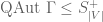
The difference between this definition and the one given in the subsequent paper is that in the subsequent paper the quantum automorphism group is given as a quotient of 





where presumably 


_______________________________________
Compact Matrix Quantum Groups acting on Graphs
Definition 1.6
Let 



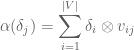
commutes with the adjacency matrix,
By the universal property, we have 


Theorem 1.8 (Banica)
Let
, and
,
be an action, and let
be a linear subspace given by a subset
. The matrix
commutes with the projection onto

Corollary 1.9
The action
preserves the eigenspaces of

Proof: Spectral decomposition yields that each 


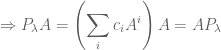
as

A Criterion for a Graph to have Quantum Symmetry
Definition 2.1
Let 


In other words, we don’t have 

Theorem 2.2
Let
, such that
and
, then we get a surjective *-homomorphism
. In this case, we have the quantum group
, and so
Warning: This is written by a non-expert (I know only about finite quantum groups and am beginning to learn my compact quantum groups), and there is no attempt at rigour, or even consistency. Actually the post shows a wanton disregard for reason, and attempts to understand the incomprehensible and intuit the non-intuitive. Speculation would be too weak an adjective.
Groups
A group is a well-established object in the study of mathematics, and for the purposes of this post we can think of a group 

such that 

For example, consider the space 


A set of symmetries 





Note that:

A group can carry additional structure, for example, compact groups carry a topology in which the composition 

Algebra of Functions
Given a group 


Depending on the class of group (e.g. finite, matrix, compact, locally compact, etc.), there may be various choices and considerations for what algebra of functions to consider, but on the whole it is nice if given an algebra of functions
Usually the following transpose maps will be considered in the structure of 



See Section 2.2 to learn more about these maps and the relations between them for the case of the complex valued functions on finite groups.
Quantum Groups
Quantum groups, famously, do not have a single definition in the same way that groups do. All definitions I know about include a coassociative (see Section 2.2) comultiplication 

Here is a non-working (quickly broken?), meta-definition, inspired in the usual way by the famous Gelfand Theorem:
A quantum group
such that:
- whenever
- every commutative algebra of functions satisfying
- whenever commutative algebras of functions
,
as set-of-points groups.
Abstract
Necessary and sufficient conditions for a Markov chain to be ergodic are that the chain is irreducible and aperiodic. This result is manifest in the case of random walks on finite groups by a statement about the support of the driving probability: a random walk on a finite group is ergodic if and only if the support is not concentrated on a proper subgroup, nor on a coset of a proper normal subgroup. The study of random walks on finite groups extends naturally to the study of random walks on finite quantum groups, where a state on the algebra of functions plays the role of the driving probability. Necessary and sufficient conditions for ergodicity of a random walk on a finite quantum group are given on the support projection of the driving state.
Link to journal here.
In the hope of gleaning information for the study of aperiodic random walks on (finite) quantum groups, which I am struggling with here, by couching Freslon’s Proposition 3.2, in the language of Fagnola and Pellicer, and in the language of my (failed) attempts (see here, here, and here) to find the necessary and sufficient conditions for a random walk to be aperiodic. It will be necessary to extract the irreducibility and aperiodicity from Freslon’s rather ‘unilateral’ result.
Well… I have an inkling that because dual groups satisfy what I would call the condition of abelianness (under the ‘quantisation’ functor), all (quantum) subgroups are normal… this is probably an obvious thing to write down (although I must search the literature) to ensure it is indeed known (or is untrue?). Edit: Wang had it already, see the last proposition here.
Let 


Recall that the set of probabilities on a finite quantum group is the set of states 


The ‘simplicity’ of the coproduct,

means that for 

so that, inductively, 

The Haar state on

and therefore necessary and sufficient conditions for the convergence of 


Here is a finite version of Freslon’s result which holds for discrete groups.
Freslon’s Ergodic Theorem for (Finite) Group Algebras
Let 
Freslon’s proof passes through the following equivalent condition:
The random walk on
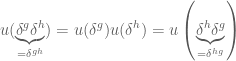
Before looking at the proof proper, we might note what happens when
To every positive definite function 
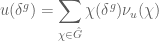
This is Bochner’s Theorem for finite abelian groups. This implies that positive definite functions on finite abelian groups are exactly convex combinations of characters.
Freslon’s condition says that to be not ergodic, ![[G\,:\,H]](https://s0.wp.com/latex.php?latex=%5BG%5C%2C%3A%5C%2CH%5D&bg=ffffff&fg=545454&s=0&c=20201002)
Therefore, if 
For 
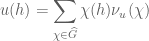
dividing both sides by 

As 


such that 


This, via Pontragin duality, is not looking at the ‘support’ of

gives the same object in as
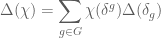

Well… of course this is true because 
We could proceed to look at Fagnola & Pellicer’s work but first let us prove Freslon’s result, hopefully in the finite case the analysis disappears…
Proof: Assume that

There exists a unitary representation 


Cauchy-Schwarz implies that

If 


This implies for 


and so 

I don’t really need to go through the third equivalent condition. If

and so

Now let us look at the language of Fagnola and Pellicer. What is a projection in 

I think periodicity is also wrapped up in Freslon’s result as I think all subgroups of dual groups are normal. Perhaps, oddly, not being concentrated on a subgroup means that the positive function (probability on the dual) is one on that subgroup…
Well… let us start with irreducible. Suppose 


Let us look at the first condition:

What now is the support of 

Now let us tackle aperiodicity. It is going to correspond, I think, with being concentrated on a ‘coset’ of a non-trivial character on
Well, we can show that if 



Now what I want to do is put this in the language of ‘inclusion’ matrices… but the inclusions for cocommutative quantum groups are trivial so no go…
We can reduce Freslon’s conditions down to irreducible and aperiodic: not coinciding with a trivial character, and not coinciding with a character.

 J.P. McCarthy: Math Page
Recent Comments