Idea and Intuition
Let  be a (usually finite) set of generators and
  a (usually finite) set of relations between the generators. The generators at this point are indeterminates, and we will be momentarily vague about what is and isn’t a relation. We write (if it exists!)
  for the universal
  -algebra generated by generators
  and relations .
It has the following universal property. Suppose  . Let
. Let  be a -algebra with elements
  that satisfy the relations , then there is a (unique) *-homomorphism
  mapping
  . This map will be a surjective *-homomorphism
  (aka a quotient map and
  a quotient of
  .
.
If the  generate , , then is a surjective *-homomorphism.
My (highly non-rigourous, the tilde reminding of hand-waving) intuition for this object is that you collect all (really all, not just isomorphism classes, we want below ![C([0,1])](https://s0.wp.com/latex.php?latex=C%28%5B0%2C1%5D%29&bg=ffffff&fg=545454&s=0&c=20201002) and e.g.
and e.g. ![C([0,2]](https://s0.wp.com/latex.php?latex=C%28%5B0%2C2%5D&bg=ffffff&fg=545454&s=0&c=20201002) ) of -algebras
) of -algebras  generated by
  generators satisfying the relations and forming a “big direct sum/product thingy” out of all of them:
 .
.
Then the *-homomorphism  given by the universal property is given by projection onto that factor (which is a surjective *-homomorphism, a quotient):
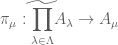 .
.
This intuition works well but we should give a brief account of things are done properly.
First off, not every relation will give a universal -algebra. For example, consider  and
and  . The problem here is one of norm. Recall our rough intuition from above. What is the norm on
  , this big thing
  ? It should be something like, where the norm of is
  the supremum over the factors:

The first approach to show that  does not exist is to consider for each
  the -algebra
 ![A_\alpha=C([0,\alpha])](https://s0.wp.com/latex.php?latex=A_%5Calpha%3DC%28%5B0%2C%5Calpha%5D%29&bg=ffffff&fg=545454&s=0&c=20201002) which is singly-generated by the self-adjoint
which is singly-generated by the self-adjoint  . But the norm
  in
in  is the supremum norm, so we find
  . From here:

which is unbounded. The relations must give a bounded norm to the generators.
As an example of relations that do bound the generators, consider, self-adjoint generators such that the sum of their squares is the identity:
 .
.
These relations bounds the norm of the generators  1, and this gives existence to this algebra, using the Gelfand philosophy giving the “algebra of continuous functions on the free sphere”,
  (I think first considered by Banica and Goswami).
Note here the relations are given by polynomial relations. If the polynomial relations are suitably admissible (i.e. give a bound to the generators), in this setting there is a real construction (real vs our ridiculous  ) of
) of  . See p.885 (link to *.pdf quantum group lecture notes of Moritz Weber).
In fact, this is only a small class of the possible relations. I suggest there are at least two more types:
- relations that would be (admissible) norm relations (for example, in one generator, adding
 , a non-polynomial relation, to the polynomial relation
  gives an admissible set of relations, and
 ![\mathrm{C}^*(g\mid g=g^*,\|g\|\leq 1)\cong C([-1,1])](https://s0.wp.com/latex.php?latex=%5Cmathrm%7BC%7D%5E%2A%28g%5Cmid+g%3Dg%5E%2A%2C%5C%7Cg%5C%7C%5Cleq+1%29%5Ccong+C%28%5B-1%2C1%5D%29&bg=ffffff&fg=545454&s=0&c=20201002) . For /norm relations see here and maybe here.
. For /norm relations see here and maybe here.
- (admissible) strong relations (see here for a use of this, with reference)
The constructions in one or both of cases might be constructive, as in the case (admissible) polynomial relations, but there is also an approach using category theory. But the main feature in all such definitions is the universal property, whose use could be summarised as follows:
Let be a universal -algebra. The universal property can be used to answer questions about such as:
- is some polynomial
 in the generators non-zero,
- is infinite dimensional,
- is non-commutative;
because, if is a -algebra with elements that satisfy the relations then there is a unique *-homomorphism  . So, for example, where
  is some such then
- if
 , then
  as
as  ,
,
- if is infinite dimensional then
 is a surjective *-homomorphism onto an infinite dimensional algebra, and so the domain is infinite dimensional too.
- if the commutator
![[f_i,f_j]\neq 0](https://s0.wp.com/latex.php?latex=%5Bf_i%2Cf_j%5D%5Cneq+0&bg=ffffff&fg=545454&s=0&c=20201002) , so that is non-commutative, then so is as
, so that is non-commutative, then so is as ![\pi([g_i,g_j])=[f_i,f_j]](https://s0.wp.com/latex.php?latex=%5Cpi%28%5Bg_i%2Cg_j%5D%29%3D%5Bf_i%2Cf_j%5D&bg=ffffff&fg=545454&s=0&c=20201002)
These quotients can be considered models of .
Two Examples
A projection  in a -algebra is such that
  . Consider
 .
.
Existence is easy, because the norm of a non-zero projection is one. To answer questions about this algebra consider the infinite dihedral group  . This has group algebra
  and group -algebra
  . Note that
  and
and  in satisfy the relations of , and so we have a *-homomorphism (in fact a *-isomorphism)
  . This tells us that any monomial in the generators of is non-zero, is infinite dimensional, and is non-commutative.
A partition of unity is a finite set of projections that sum to the identity,  . A magic unitary in a -algebra is a matrix
  such that the entries along any one row or column form a partition of unity. Consider (notation to be kept mysterious):
 .
.
Consider the following magic unitary:
 .
.
Note that the  satisfy the relations of
  and in fact generate
  from above. Thus we have a quotient
  which shows that
  is infinite dimensional and noncommutative.
It is possible to show using a magic unitary with entries in  that for
  , a monomial with entries in
  is zero for trivial reasons only (link to *.pdf, from Theorem 1 on).
In addition it can be shown that for  (and similarly
  ) the matrix in
  with
with  – entries

is a magic unitary, and thus by the universal property  is a *-homomorphism… the comultiplication giving the structure of a compact quantum group.
Commutative Examples
If a universal algebra is commutative (as in commutativity, ![[g_i,g_j]=0](https://s0.wp.com/latex.php?latex=%5Bg_i%2Cg_j%5D%3D0&bg=ffffff&fg=545454&s=0&c=20201002) , is one of the relations, vs the relations imply commutativity, as in
, is one of the relations, vs the relations imply commutativity, as in  (nice exercise)), we write
  . In this case Gelfand’s Theorem, that
  , often allows us to easily identity the algebra (vs the noncommutative case where the universal algebra is mostly studied via models, quotients).
Theorem
If is a (polynomial) universal commutative -algebra, then it of the form  , and
, and  is given by the tuples
  that satisfy the relations of of .
Proof: Characters are *-homomorphisms  .
.
Suppose that  satisfy the relations. Then by the universal property,
  is a *-homomorphism.
On the contrary, suppose that  is a character. Then the relations are preserved under a *-homomorphism.
Examples
For  , projections in
  are just the scalars zero and one. Thus the spectrum is
  and
and  is the algebra of continuous functions on four points.
For  collect the tuple of
  generators in a matrix. The relations imply that each such tuple is in fact a permutation matrix, and so the universal algebra above is the algebra of continuous functions on
  .
.
For

you end up with tuples of real numbers in ![[-1,1]](https://s0.wp.com/latex.php?latex=%5B-1%2C1%5D&bg=ffffff&fg=545454&s=0&c=20201002) whose sum of squares is one… otherwise known as the sphere
whose sum of squares is one… otherwise known as the sphere  .
.
Liberations
An interesting business here is to start with a universal commutative algebra, say one of the three examples above… and see do you get something strictly bigger, necessarily non-commutative, if you drop commutativity. In the above, yes you do. Gelfand’s theorem says that a commutative unital -algebra is the algebra of continuous functions on a compact space (which we call a classical space). The Gelfand Philosophy says therefore that a noncommutative unital -algebra can be thought of as the algebra of continuous functions on a compact quantum space  . Note here is not a set-of-points, but a virtual object, and strictly
  is just notation (but see here).
Liberating the second example above from commutativity is the passage from the permutation group to the quantum permutation group  . Liberating the third example above gives the passage from the real sphere to a quantum sphere called the free sphere
  .
.
We can also, of course, work in the other direction, imposing commutativity on not-necessarily universal  . If we write
  , then imposing commutativity (qotienting by commutator ideal) gives us the classical version of .
Imposing commutativity is not so scary: using the above you just get  … and everything we said above about identifying characters on
  holds for too.
This can be used: for example if a quantum group acts on a structure  , then its classical version acts on . This idea was used by Banica and I to show that not every quantum permutation group is the quantum automorphism group of a finite graph (link to *.pdf).

 symbols. The algebra of continuous functions
  on
on  .
. be the uniform probability distribution on
 ? Well, this will equal, in some notation we won’t fully explain here:
![\displaystyle \mathbb{P}[\pi(1)=1]=\pi(\mathbf{1}_{1\to 1})=\frac{1}{N}](https://s0.wp.com/latex.php?latex=%5Cdisplaystyle+%5Cmathbb%7BP%7D%5B%5Cpi%281%29%3D1%5D%3D%5Cpi%28%5Cmathbf%7B1%7D_%7B1%5Cto+1%7D%29%3D%5Cfrac%7B1%7D%7BN%7D&bg=ffffff&fg=545454&s=0&c=20201002) .
. :
: .
. . Now, after having observed this random permutation mapping
  and define:
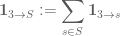 .
.![\displaystyle \mathbb{P}[\pi_{1\to 1}(3)\in S]=\frac{|S|}{N-1}](https://s0.wp.com/latex.php?latex=%5Cdisplaystyle+%5Cmathbb%7BP%7D%5B%5Cpi_%7B1%5Cto+1%7D%283%29%5Cin+S%5D%3D%5Cfrac%7B%7CS%7C%7D%7BN-1%7D&bg=ffffff&fg=545454&s=0&c=20201002) .
. , we get further conditioning, to let us say
  :
:
 we see
  ? We find it is:
![\displaystyle \mathbb{P}[\nu(2)=2]=\frac{1}{N-2}](https://s0.wp.com/latex.php?latex=%5Cdisplaystyle+%5Cmathbb%7BP%7D%5B%5Cnu%282%29%3D2%5D%3D%5Cfrac%7B1%7D%7BN-2%7D&bg=ffffff&fg=545454&s=0&c=20201002) .
. means after, and the state-conditioning implicit
![\displaystyle \mathbb{P}[(\pi(2)=2)\succ (\pi(3)\in S)\succ(\pi(1)=1)]](https://s0.wp.com/latex.php?latex=%5Cdisplaystyle+%5Cmathbb%7BP%7D%5B%28%5Cpi%282%29%3D2%29%5Csucc+%28%5Cpi%283%29%5Cin+S%29%5Csucc%28%5Cpi%281%29%3D1%29%5D&bg=ffffff&fg=545454&s=0&c=20201002)

 ? But
? But ![\displaystyle \mathbb{P}[\pi_{1\to 1}(1)=1]=\dfrac{\pi(\mathbf{1}_{1\to 1}\mathbf{1}_{1\to 1}\mathbf{1}_{1\to 1})}{\pi(\mathbf{1}_{1\to 1})}=1](https://s0.wp.com/latex.php?latex=%5Cdisplaystyle+%5Cmathbb%7BP%7D%5B%5Cpi_%7B1%5Cto+1%7D%281%29%3D1%5D%3D%5Cdfrac%7B%5Cpi%28%5Cmathbf%7B1%7D_%7B1%5Cto+1%7D%5Cmathbf%7B1%7D_%7B1%5Cto+1%7D%5Cmathbf%7B1%7D_%7B1%5Cto+1%7D%29%7D%7B%5Cpi%28%5Cmathbf%7B1%7D_%7B1%5Cto+1%7D%29%7D%3D1&bg=ffffff&fg=545454&s=0&c=20201002) .
. ,
, … and no permutation maps one to one and one to two (you’d need a relation to do that), and so
  , so is the length five monomial above, and so is the probability we spoke about.
 :
: .
. : the less we specify about the event, in this case represented by the projection
  , the more general it is, the larger the probability.
 , the probability of the analogue of a “random” quantum permutation, the Haar state
  doing this is:
![\displaystyle \mathbb{P}[(h(1)=2)\succ(h(3)=3)\succ (h(1=1))]=\frac{N-3}{q(N)}](https://s0.wp.com/latex.php?latex=%5Cdisplaystyle+%5Cmathbb%7BP%7D%5B%28h%281%29%3D2%29%5Csucc%28h%283%29%3D3%29%5Csucc+%28h%281%3D1%29%29%5D%3D%5Cfrac%7BN-3%7D%7Bq%28N%29%7D&bg=ffffff&fg=545454&s=0&c=20201002)
 are entries
  of a universal magic unitary. We say:
![\mathbb{P}[(h(2)=2)\succ (h(3)\in S)\succ (h(1)=1)]:=h(|u_{22}u_{S,3}u_{11}|^2)](https://s0.wp.com/latex.php?latex=%5Cmathbb%7BP%7D%5B%28h%282%29%3D2%29%5Csucc+%28h%283%29%5Cin+S%29%5Csucc+%28h%281%29%3D1%29%5D%3A%3Dh%28%7Cu_%7B22%7Du_%7BS%2C3%7Du_%7B11%7D%7C%5E2%29&bg=ffffff&fg=545454&s=0&c=20201002) ,
, . We find this probability is:
![\displaystyle \mathbb{P}[(h(2)=2)\succ (h(3)\in S)\succ (h(1)=1)]=\frac{|S|(N^2-5N+5+|S|)}{(N-2)q(N)}](https://s0.wp.com/latex.php?latex=%5Cdisplaystyle+%5Cmathbb%7BP%7D%5B%28h%282%29%3D2%29%5Csucc+%28h%283%29%5Cin+S%29%5Csucc+%28h%281%29%3D1%29%5D%3D%5Cfrac%7B%7CS%7C%28N%5E2-5N%2B5%2B%7CS%7C%29%7D%7B%28N-2%29q%28N%29%7D&bg=ffffff&fg=545454&s=0&c=20201002) .
. . Again, the less specificity about the event, the greater the probability.
 , where
  is the complement of
  :
:![\displaystyle \mathbb{P}[(h(2)=2)\succ (h(3)\in S)\succ (h(1)=1)]](https://s0.wp.com/latex.php?latex=%5Cdisplaystyle+%5Cmathbb%7BP%7D%5B%28h%282%29%3D2%29%5Csucc+%28h%283%29%5Cin+S%29%5Csucc+%28h%281%29%3D1%29%5D&bg=ffffff&fg=545454&s=0&c=20201002)
![\displaystyle=\mathbb{P}[(\pi(2)=2)\succ (\pi(3)\in S)\succ(\pi(1)=1)]\cdot\left[1-\frac{|S^c|+1}{q(N)}\right]](https://s0.wp.com/latex.php?latex=%5Cdisplaystyle%3D%5Cmathbb%7BP%7D%5B%28%5Cpi%282%29%3D2%29%5Csucc+%28%5Cpi%283%29%5Cin+S%29%5Csucc%28%5Cpi%281%29%3D1%29%5D%5Ccdot%5Cleft%5B1-%5Cfrac%7B%7CS%5Ec%7C%2B1%7D%7Bq%28N%29%7D%5Cright%5D&bg=ffffff&fg=545454&s=0&c=20201002)
 after
after  after
after  but instead we asked about
  ? This should be non-zero, but what is the dependence on
  . We will write down the probability, and then explain, mathematically, why the symmetry with respect to
  , with respect to
  :
:![\displaystyle \mathbb{P}[(h(1)=2)\succ (h(3)\in S)\succ (h(1)=1)]=\dfrac{|S|(N-2-|S|)}{q(N)}](https://s0.wp.com/latex.php?latex=%5Cdisplaystyle+%5Cmathbb%7BP%7D%5B%28h%281%29%3D2%29%5Csucc+%28h%283%29%5Cin+S%29%5Csucc+%28h%281%29%3D1%29%5D%3D%5Cdfrac%7B%7CS%7C%28N-2-%7CS%7C%29%7D%7Bq%28N%29%7D&bg=ffffff&fg=545454&s=0&c=20201002) .
. . Insert between them
  :
: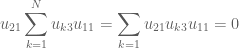 .
. . So split into two sums:
 .
. . They are not positive though. We can now split:
 .
. of both sides to show that:
 .
. (here
(here  is generic, not exotic) given by a quotient
  , is such that for all monomials
  in the generators
  :
: ,
, . In the paper above I explored calculating the Haar state on
  … the point being that the Haar measure on exotic
  can be zero for trivial reasons only, allows us to put bounds on the Haar state. If these bounds could force the fourth moment of the main character (with respect to the Haar state) to equal 14, then the Haar state on length four monomials would be equal for both. Alas… they only bound them less than or equal to 15. At this point the paper gives up… but this moment is a whole number, either 14 or 15… so I added the relation that the fourth moment is 15… and what comes out is that the parameter above is zero… but when this parameter is zero we find, in exotic
  ,
, is not zero for trivial reasons, and the Haar state is faithful… the fourth moment equal to 15 gives classical
  is forced equal to 14, giving the same explicit formula for length four generators as for
  in a
in a  then we can bound the summands
  . Write
  . Note
  . Let
. Let  and apply this to
  which yields, with
  . The result follows by positivity of the sum and the state. To apply to the above play with the
  . Then let
  and define a state
  on
on  , also equal to the norm of
  and we need to reduce this by coming up with a better method or adjusting the Euler Method.
 notation
 J.P. McCarthy: Math Page
Recent Comments