
You are currently browsing the category archive for the ‘Quantum Groups’ category.
Quantum Subgroups
Let 




The Classical Case
In the classical case, where the algebras of functions on
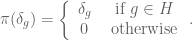
There is a natural embedding, in the classical case, if 
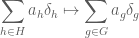
with 


Furthermore, 

which resembles 
In the case where 


where the i.i.d. 

We can also prove this using the language of the commutative algebra of functions on

Consider now two probabilities on 


Consider





that is 
Some Questions
Back to quantum groups with non-commutative algebras of functions.
- Can we embed
and do we have
, giving the projection-like quality to
- Is
a suitable definition for
If this is the case, the above proof carries through to the quantum case.
- If there is no such embedding, what is the appropriate definition of a
- If
Edit
UwF has recommended that I look at this paper to improve my understanding of the concepts involved.
Slides of a talk given at the Irish Mathematical Society 2018 Meeting at University College Dublin, August 2018.
Abstract Four generalisations are used to illustrate the topic. The generalisation from finite “classical” groups to finite quantum groups is motivated using the language of functors (“classical” in this context meaning that the algebra of functions on the group is commutative). The generalisation from random walks on finite “classical” groups to random walks on finite quantum groups is given, as is the generalisation of total variation distance to the quantum case. Finally, a central tool in the study of random walks on finite “classical” groups is the Upper Bound Lemma of Diaconis & Shahshahani, and a generalisation of this machinery is used to find convergence rates of random walks on finite quantum groups.
Amaury Freslon has put a pre-print on the arXiv, Cut-off phenomenon for random walks on free orthogonal quantum groups, that answers so many of these questions, some of which appeared as natural further problems in my PhD thesis.
It really is a fantastic paper and I am delighted to see my PhD work cited: it appears that while I may have taken some of the low hanging fruit, Amaury has really extended these ideas and has developed some fantastic examples: all beyond my current tools.
This pre-print gives me great impetus to draft a pre-print of my PhD work, hopefully for publication. I am committed to improving my results and presentation, and Amaury’s paper certainly provides some inspiration is this direction.
As things stand I do not have to tools to develop results as good as Amaury’s. Therefore I am trying to develop my understanding of compact quantum groups and their representation theory. Afterwards I can hopefully study some of the remaining further problems mentioned in the thesis.
As suggested by Uwe Franz, representation theoretic methods (such as presented by Diaconis (1988) for the classical case), might be useful for analysing random walks on quantum homogeneous spaces.
Distances between Probability Measures
Let 


The algebra 
Define a (bijective) map 

for 
Then, where 



(Quantum Total Variation Distance (QTVD))
Standard non-commutative 

(supremum presentation)
In the classical case, using the test function 


In the classical case the set of indicator functions on the subsets of the group exhaust the set of projections in

(Projection Distance)
In all cases the quantum total variation distance and the supremum presentation are equal. In the classical case they are equal also to the projection distance. Therefore, in the classical case, we are free to define the total variation distance by the projection distance.
Quantum Projection Distance  Quantum Variation Distance?
Perhaps, however, on truly quantum finite groups the projection distance could differ from the QTVD. In particular, a pair of states on a 
Slides of a talk given at the Topological Quantum Groups and Harmonic Analysis workshop at Seoul National University, May 2017.
Abstract A central tool in the study of ergodic random walks on finite groups is the Upper Bound Lemma of Diaconis & Shahshahani. The Upper Bound Lemma uses the representation theory of the group to generate upper bounds for the distance to random and thus can be used to determine convergence rates for ergodic walks. These ideas are generalised to the case of finite quantum groups.
After a long time I have finally completed my PhD studies when I handed in my hardbound thesis (a copy of which you can see here).
It was a very long road but thankfully now the pressure is lifted and I can enjoy my study of quantum groups and random walks thereon for many years to come.
The following is taken (almost) directly from the first draft of my PhD thesis.
The Quantisation Functor
This functor can be used to motivate the correct notion of (the algebra of functions on) a quantum group. Note that the ‘quantised’ objects that are arrived at via this ‘categorical quantisation’ are nothing but the established definitions so this section should be considered as little more than a motivation. The author feels that introductory texts on quantum groups could include these ideas and that is why they are included here. This quantisation is the translation of statements about a finite group,
This notion of quantisation sits naturally in category theory where two functors — the 
Let 


Representation Theory
A representation of 

The dimension of 


One property of these that we will use it that 
Two representations 



We can show that every representation is equivalent to a unitary representation.
Timmermann shows that if 


Given a representation 


so that the matrix elements of 

Timmermann shows that the matrix elements have the following orthogonality relations:
- If
and
are inequivalent then
for all
and
.
- If
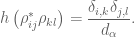
This second relation is more complicated without the 

![\left[F\right]_{ij}=\delta_{i,j}](https://s0.wp.com/latex.php?latex=%5Cleft%5BF%5Cright%5D_%7Bij%7D%3D%5Cdelta_%7Bi%2Cj%7D&bg=ffffff&fg=545454&s=0&c=20201002)

Denote by 


Diaconis-Van Daele Fourier Theory
Taken from An Invitation to Quantum Groups and Duality by Timmermann.
Let 


Now we wish to dualise the terms invariant, irreducible, unitary, intertwiner, equivalent, matrix elements. As we want a theory dual to group representation we won’t use Timmermann’s definitions at face value but instead construct them from their group representation counterparts. This might prove difficult. In attempting to dualise group representation theory as quantum group corepresentation theory is ‘everything’ dualised? Our first term here provides a problem. Do we need an invariant corepresentation or a ‘coinvariant representation’?
Invariant
An invariant subspace of a group representation 


This means that for the family of linear maps 


As an example of what we might need to do let 

A subspace 

Timmermann’s definition makes good sense. One is confused between invariant co-representation and co-invariant co-representation. I am guessing that Timmermann’s definition will allow us to do what we want.


Recent Comments