
You are currently browsing the category archive for the ‘Random Walks on Finite Quantum Groups’ category.
In a recent preprint, Haonan Zhang shows that if 


The algebra of functions 

As it happens, where 


To help with intuition, making the incorrect assumption that 

as for classical groups 
That is the condition 
Consider a random walk on a classical (the algebra of functions on 

The following is a very non-algebra-of-functions-y proof that 

Proof: Let 

We claim that the random walk on
The driving probability
If 


Therefore,

Apart from the big reason — that this proof talks about points galore — this kind of proof is not available in the quantum case because there exist
So we have some questions:
- Is there a proof of the classical result (above) in the language of the algebra of functions on
- And can this proof be adapted to the quantum case?
- Is the claim perhaps true for all finite quantum groups but not all compact quantum groups?
Quantum Subgroups
Let 




The Classical Case
In the classical case, where the algebras of functions on
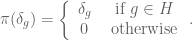
There is a natural embedding, in the classical case, if 
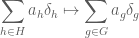
with 


Furthermore, 

which resembles 
In the case where

where the i.i.d. 

We can also prove this using the language of the commutative algebra of functions on

Consider now two probabilities on 


Consider





that is 
Some Questions
Back to quantum groups with non-commutative algebras of functions.
- Can we embed
and do we have
, giving the projection-like quality to
- Is
a suitable definition for
If this is the case, the above proof carries through to the quantum case.
- If there is no such embedding, what is the appropriate definition of a
- If
Edit
UwF has recommended that I look at this paper to improve my understanding of the concepts involved.
Slides of a talk given at the Irish Mathematical Society 2018 Meeting at University College Dublin, August 2018.
Abstract Four generalisations are used to illustrate the topic. The generalisation from finite “classical” groups to finite quantum groups is motivated using the language of functors (“classical” in this context meaning that the algebra of functions on the group is commutative). The generalisation from random walks on finite “classical” groups to random walks on finite quantum groups is given, as is the generalisation of total variation distance to the quantum case. Finally, a central tool in the study of random walks on finite “classical” groups is the Upper Bound Lemma of Diaconis & Shahshahani, and a generalisation of this machinery is used to find convergence rates of random walks on finite quantum groups.
Distances between Probability Measures
Let 


The algebra 
Define a (bijective) map 

for 
Then, where 



(Quantum Total Variation Distance (QTVD))
Standard non-commutative 

(supremum presentation)
In the classical case, using the test function 


In the classical case the set of indicator functions on the subsets of the group exhaust the set of projections in

(Projection Distance)
In all cases the quantum total variation distance and the supremum presentation are equal. In the classical case they are equal also to the projection distance. Therefore, in the classical case, we are free to define the total variation distance by the projection distance.
Quantum Projection Distance  Quantum Variation Distance?
Perhaps, however, on truly quantum finite groups the projection distance could differ from the QTVD. In particular, a pair of states on a 
Slides of a talk given at the Topological Quantum Groups and Harmonic Analysis workshop at Seoul National University, May 2017.
Abstract A central tool in the study of ergodic random walks on finite groups is the Upper Bound Lemma of Diaconis & Shahshahani. The Upper Bound Lemma uses the representation theory of the group to generate upper bounds for the distance to random and thus can be used to determine convergence rates for ergodic walks. These ideas are generalised to the case of finite quantum groups.
After a long time I have finally completed my PhD studies when I handed in my hardbound thesis (a copy of which you can see here).
It was a very long road but thankfully now the pressure is lifted and I can enjoy my study of quantum groups and random walks thereon for many years to come.
Let 


Representation Theory
A representation of 

The dimension of 


One property of these that we will use it that 
Two representations 



We can show that every representation is equivalent to a unitary representation.
Timmermann shows that if 


Given a representation 


so that the matrix elements of 

Timmermann shows that the matrix elements have the following orthogonality relations:
- If
and
are inequivalent then
for all
and
.
- If
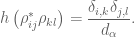
This second relation is more complicated without the 

![\left[F\right]_{ij}=\delta_{i,j}](https://s0.wp.com/latex.php?latex=%5Cleft%5BF%5Cright%5D_%7Bij%7D%3D%5Cdelta_%7Bi%2Cj%7D&bg=ffffff&fg=545454&s=0&c=20201002)

Denote by 


Diaconis-Van Daele Fourier Theory
In Group Representations in Probability and Statistics, Diaconis presents his celebrated Upper Bound Lemma for a random walk on a finite group

where the sum is over all non-trivial irreducible representations of
In this post, we begin this study by looking a the (co)-representations of a quantum group

While this was perfectly adequate for when we are working with finite groups, it might not be as transparently quantisable. Instead we define a representation of a group as an action

such that the map 

Let 

and the adjoint 

To give the structure of a quantum group we define the following linear maps:




The functional 

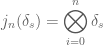
To do probability theory consider states 

Whenever 


At the moment we will use the one-norm to measure the distance to stationary:

A quick calculation shows that:

When, for example, 


Taken from Random Walks on Finite Quantum Groups by Franz & Gohm.
Theorem
Let
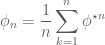

converges to an idempotent state on 
Proof : Let 


I have no idea where the equality comes from.
Choose sequence 


Remark
If
Remark
Due to cyclicity the sequence 


but


 J.P. McCarthy: Math Page
Recent Comments