
You are currently browsing the category archive for the ‘MATH6015’ category.
I am emailing a link of this to everyone on the class list every Friday afternoon. If you are not receiving these emails or want to have them sent to another email address feel free to email me at jpmccarthymaths@gmail.ie and I will add you to the mailing list.
Attendance
If you don’t attend lectures and tutorials now you will fail this module. Please don’t let yourself be one of these people.
Lectures
We have started section 2.4 and next week we will see how to do definite (with limits) integrals that require a substitution as well as some other integration techniques.
Also I don’t know why I didn’t advise this earlier — you would be well worth investing in a ring binder (to be kept at home or whatever) for your notes. You can see already the amount of sheets. You should be organised with these and only bring the ones we are working on to class.
Tutorials
On Monday we will have a tutorial. We should be able to do the exercises on pages 96 and 102 but if we cannot we will have to work on these. Otherwise we will work on the exercises on page 108 & 109.
Academic Learning Centre
If you are having serious difficulty with MATH6015 Technological Maths 2, then please visit the Academic Learning Centre ASAP where they will sort you out as best they can free of charge. The timetable may be found here.
I am emailing a link of this to everyone on the class list every Friday afternoon. If you are not receiving these emails or want to have them sent to another email address feel free to email me at jpmccarthymaths@gmail.ie and I will add you to the mailing list.
Attendance
If you don’t attend lectures and tutorials now you will fail this module. Please don’t let yourself be one of these people.
Notes
So far we have introduced the concept of a definite integral, explained the importance of the antiderivative in the evaluation of them, and some common antiderivatives. MATH6015 Lecture Notes (with gaps).
Also I don’t know why I didn’t advise this earlier — you would be well worth investing in a ring binder (to be kept at home or whatever) for your notes. You can see already the amount of sheets. You should be organised with these and only bring the ones we are working on to class.
Next Week
We shall learn how to evaluate and find some more complicated definite integrals and antiderivatives.
Academic Learning Centre
If you are having serious difficulty with MATH6015 Technological Maths 2, then please visit the Academic Learning Centre ASAP where they will sort you out as best they can free of charge. The timetable may be found here.
I am emailing a link of this to everyone on the class list every Friday afternoon. If you are not receiving these emails or want to have them sent to another email address feel free to email me at jpmccarthymaths@gmail.ie and I will add you to the mailing list.
Test 1 Results
You are identified by the last four digits of your student number. Note that there are six of us in the forties. Although technically a pass, I would point out that the marking scheme was fairly generous: if you scored 44/100 things are not all well at all. You need to work harder.
We have to realise that maths is learnt linearly. This means that a lot of what we are doing in MATH6015 depends on what we did in MATH6014. In turn everything we do in MATH6040 will rely on MATH6015. Next year we study differential equations in MATH7020: what we are doing now is laying the foundations for this. If our foundations are shaky we’re in a tight spot.
Those of us who failed are in a serious spot at the moment. I will speak with you on Monday.
It is O.K. to find material difficult. It is OK to make silly mistakes. It is not OK to miss lectures, not use the tutorials and ignore the problem. Worst of all is not making the difficult mental effort to understand what we are doing. Here is Richard Feynmann, one of the greatest scientific minds of all time:
If Richard Feynmann can be confused so can all of us. The difference we can make is to persevere, try, try and try to understand what the hell we are doing. This is difficult but eventually you will get it.
Giving up is not an option.
To the people who excelled well done. You should be particularly proud if you battled this confusion and won.
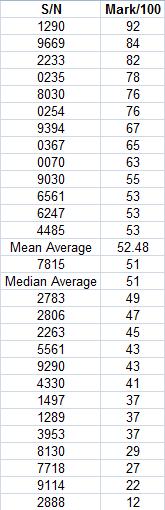
I have two students who did not write their name down on the test. I have identified who the tests belong to but I can’t figure out which is which. These people can get their results on Monday.
Notes
So far we have covered up to and including the Constraint Optimisation Problems: MATH6015 Lecture Notes (with gaps). We have now finished the first part of the course and we now move onto integration.
Also I don’t know why I didn’t advise this earlier — you would be well worth investing in a ring binder (to be kept at home or whatever) for your notes. You can see already the amount of sheets. You should be organised with these and only bring the ones we are working on to class.
Next Week
On Monday we will have a tutorial where we will try and tie up as many differentiation loose ends as possible, particularly max/min & optimisation problems.
In the rest of the week we shall start our study of integration.
I am emailing a link of this to everyone on the class list every Friday afternoon. If you are not receiving these emails or want to have them sent to another email address feel free to email me at jpmccarthymaths@gmail.ie and I will add you to the mailing list.
Notes
So far we have covered up to and including the Duality of Algebra & Geometry: MATH6015 Lecture Notes (with gaps).
Also I don’t know why I didn’t advise this earlier — you would be well worth investing in a ring binder (to be kept at home or whatever) for your notes. You can see already the amount of sheets. You should be organised with these and only bring the ones we are working on to class.
Test!
The first test will take place at 9 am this Friday 19 October (Week 5). It is a test that could arguably take 42 minutes but I’ll give ye from 9.05 — 10 am. Please find a sample. You will be given a copy of these tables. Don’t worry I’ll scribble out the “UCC”!
Note that the format will be the same of this.
- Differentiation from First Principles
- Tangent Lines
- Differentiate by Rule
- Differentiate by Rule
- Differentiate by Rule
- Rates of Change
- Rate of Change/ Geometry of Graph
Next Week
On Monday we will have a tutorial where we will try and get everything sorted for the test. In the rest of the week we shall look at applying what we’ve learned about the AG-GA Dictionary to finding the local maxima and minima of functions. If you haven’t got a copy, you might want the answers to the Chain Rule exercises.
I am emailing a link of this to everyone on the class list every Friday afternoon. If you are not receiving these emails or want to have them sent to another email address feel free to email me at jpmccarthymaths@gmail.ie and I will add you to the mailing list.
Notes
So far we have covered up to and including the Chain Rule: MATH6015 Lecture Notes (with gaps).
Also I don’t know why I didn’t advise this earlier — you would be well worth investing in a ring binder (to be kept at home or whatever) for your notes. You can see already the amount of sheets. You should be organised with these and only bring the ones we are working on to class.
Test!
The first test will take place at 9 am on Friday 19 October (Week 5). It is a test that could arguably take 42 minutes but I’ll give ye from 9.05 — 10 am. Please find a sample. I will give ye a copy on Monday. You will be given a copy of these tables. Don’t worry I’ll scribble out the “UCC”!
Note that the format will be the same of this.
- Differentiation from First Principles
- Tangent Lines
- Differentiate by Rule
- Differentiate by Rule
- Differentiate by Rule
- Rates of Change
- Rate of Change/ Geometry of Graph
Next Week
On Monday we will have a tutorial where we will try and get a hang of the Chain Rule. In the rest of the week we shall look at applying what we’ve learned to rates of change. Also we will ask what the derivative can tell us about the geometry of a graph.
I am emailing a link of this to everyone on the class list every Friday afternoon. If you are not receiving these emails or want to have them sent to another email address feel free to email me at jpmccarthymaths@gmail.ie and I will add you to the mailing list.
Notes
So far we have covered the quotient rule: MATH6015 notes.
Answers to Exercises
Page 13
Q. 1(a) False, (b) False ,(c) False. Q. 3 



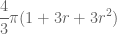



Page 21
Q. 1( a) 59, (b) 256, (c) 0. Q.2 (a) 


Page 30
(i) 


Page 32
Q. 1. (i) 5, (ii) 


Page 34
Q. 1 


Page 37
Q. 1 

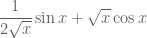


Page 40
Q. 1 
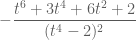
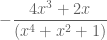


Next Week
We will be doing the Chain Rule. This is very important for differentiation and we need to be good at the product rule and the quotient rule before we start it. Therefore we will have a tutorial on Monday. If we cover the Chain Rule with time to spare we may be as well to have another tutorial. We’ll see.
I am emailing a link of this to everyone on the class list every Friday afternoon. If you are not receiving these emails or want to have them sent to another email address feel free to email me at jpmccarthymaths@gmail.ie and I will add you to the mailing list.
Notes
So far we have covered the revision of functions and motivation.
Timetable
My best understanding is that your timetable has been changed. You will now see me
Monday at 4 in B260
Tuesday at 9 in B262
Thursday at 11 in B188
Friday at 9 in PF45
This is still not finalised but is the state of play as we speak.
Continuous Assessment
There has been a late changes to the continuous assessment and coursework breakdown. This can be seen here in the Module Descriptor.
Rather than a 20% test in week 6 there will now be two 15% tests: one in Week 5 and one in Week 10. I hope to give you two week’s notice of each of these and also provide sample tests.

 J.P. McCarthy: Math Page
Recent Comments