Introduction
Every finite quantum group has finite dimensional algebra of functions:
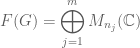 .
.
At least one of the factors must be one-dimensional to account for the counit  , and if this factor is denoted
  , the counit is given by the dual element
  . There may be more and so reorder the index
  so that
  for
for  , and
, and  for
for  :
:
 ,
,
Denote by  the states of
  . The pure states of arise as pure states on single factors.
In the case of the Kac-Paljutkin and Sekine quantum groups, the convolution powers of pure states exhibit a periodicity of sorts. Recall for these quantum groups that  consists of a single matrix factor.
In these cases, for pure states of the form  , that is supported on
  (and we can say a little more than is necessary), the convolution remains supported on because
 .
.
If we have a pure state  supported on
  , then because
 ,
,
then  must be supported on, because of , .
Inductively all of the  are supported on and the
  are supported on . This means that the convolutions powers of a pure state, in these cases, cannot converge to the Haar state.
The question is, do the results above about the image of and under the coproduct hold more generally? I believe that the paper of Kac and Paljutkin shows that this is the case whenever consists of a single factor… but does it hold more generally?
To find out we go back and do some sandboxing with the paper of Kac and Paljutkin. Which is a pleasure because that paper is beautiful. The blue stuff is my own scribbling.
Finite Ring Groups
Let  be a finite quantum group with notation on the algebra of functions as above. Note that is commutative. Let
 ,
,
which is a central idempotent.
Lemma 8.1
 .
.
Proof: If  , then for some , and
  , the mapping
  is a non-zero homomorphism from
  into commutative which is impossible.
If  , then one of the
  , with ‘something’ in . Using the centrality and projectionality of
  , we can show that the given map is indeed a homomorphism.
It follows that  , and so

Lemma 8.2

Proof: Suppose that  for some non-commutative . This means that there exists an index
  such that
  . Then for that factor,

is a non-null homomorphism from the non-commutative into the commutative.
We see that  for all
  . Putting
  we get the result
The following says that is a group-like projection. We know from previous work that if a state is supported on a group-like projection that it will remain supported on it. In particular, any state supported on will remain there.
Lemma 8.3
 .
.
Proof: Since  is a homomorphism,
  is an idempotent in
  . I do not understand nor require the rest of the proof.
Lemma 8.4
 is the algebra of functions on finite group with elements , and we write
  . The coproduct is given by
  .
.
We have:
 ,
,
 ,
,
 ,
,
as  .
.
The element  is a sum of four terms, lying in the subalgebras:
 .
.
We already know what is going on with the first summand. Denote the second by  . From the group-like-projection property, the last two summands are zero, so that
 .
.
Since the  are symmetric (
 ) mutually orthogonal idempotents, has similar properties:

for  .
.
At this point Kac and Paljutkin restrict to  , that is there is only one summand. Here we try to keep arbitrarily (finitely) many summands in .
Let the summand have matrix units  , where
  . Kac and Paljutkin now do something which I think is a little dodgy, but basically that the integral over is equal on each of the , equal on each of the
  , and then zero off the diagonal.
It does follow from above that each  is a projection.
Now I am stuck!

 be a closed (two-sided) ideal in a non-commutative unital
  -algebra
  . Such an ideal is self-adjoint and so a non-commutative
  . The quotient map is given by
  ,
,  , where
  is the equivalence class of
  under the equivalence relation:
 .
. ,
, ,
, is a
is a  and
and  . Consider
 .
. . Now note that
 ,
, ). Therefore
  .
. , where
  is the quotient map
  .
. . Let
. Let  be the set of functions which vanish on
  : this is a C*-ideal. The kernal of
  is
is  so that
  . Note that
 .
. if
if  . It is not possible that both
  and
and  are in
  , but
, but  , which is not in
  or
or  is equal to zero and so:
 ,
, .
. . Let
. Let  be the ring homomorphism
 .
. ,
,  , and so we have the isomorphism of rings, which presumably carries forward to the algebras of functions level…
 be the algebra of continuous functions on a compact matrix quantum group. Such an object is given by a matrix
  which generates
  such that
 ,
, and
and  are invertible in
  .
. is such an object, with the
  given by
  . Furthermore
 .
. is a representation if it is invertible and
 .
. is also invertible and so we have:
 is also the algebra of continuous functions on a compact matrix quantum group.
 is ergodic if the convolution powers
  converge to the Haar state
  .
. , there exists
  such that
  .
.
![\mathbb{P}[\xi_{i+1}=t|\xi_{i}=s]=\mathbb{P}[\xi_{i+1}=th|\xi_{i}=sh]](https://s0.wp.com/latex.php?latex=%5Cmathbb%7BP%7D%5B%5Cxi_%7Bi%2B1%7D%3Dt%7C%5Cxi_%7Bi%7D%3Ds%5D%3D%5Cmathbb%7BP%7D%5B%5Cxi_%7Bi%2B1%7D%3Dth%7C%5Cxi_%7Bi%7D%3Dsh%5D&bg=ffffff&fg=545454&s=0&c=20201002) ).
). , specifically on
  , then we have periodicity (
 ), and
  , the order of
  .
. , in the sense that
  for a group-like-projection
  , that so are the
  . The analogue of irreducible is that for all
  projections in
  . If
. If  , where
  .
. ,
, . If
. If  for all
  also, so that
  (as the Haar state is faithful). I was able to prove that
  ,
, with
with  . This has a positive density of trace one
  )
) ,
, is the Haar element.
  . Assume that
  (if
(if  , then
  for all
 .
. .
. .
. be an eigenvalue of
  of eigenvector
  . This yields
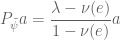 .
. , and
, and  , then
  , contradiction), we have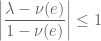
 .
. and thus the only eigenvalue of magnitude one is
  , which has (left)-eigenvector the stationary distribution of
  , then
  and we have, if we write
  ,
, ,
, (so that
  ).
). converge and thus so do the
  . Result holds for compact Kac if the state has a density.
 is concentrated on a coset of a proper normal subgroup of
 is a minimal projection (coset) in the quotient space of the normal subgroup (to be double checked) given by

 J.P. McCarthy: Math Page
Recent Comments