
You are currently browsing the category archive for the ‘Research’ category.
This post follows on from this one. The purpose of posts in this category is for me to learn more about the research being done in quantum groups. This post looks at this paper of Schmidt.
Preliminaries
Compact Matrix Quantum Groups
The author gives the definition and gives the definition of a (left, quantum) group action.
Definition 1.2
Let 





Quantum Automorphism Groups of Finite Graphs
Schmidt in this earlier paper gives a slightly different presentation of 
Definition 1.3
The quantum automorphism group of a finite graph 





_______________________________________
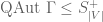
The difference between this definition and the one given in the subsequent paper is that in the subsequent paper the quantum automorphism group is given as a quotient of 





where presumably 


_______________________________________
Compact Matrix Quantum Groups acting on Graphs
Definition 1.6
Let 



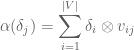
commutes with the adjacency matrix,
By the universal property, we have 


Theorem 1.8 (Banica)
Let
, and
,
be an action, and let
be a linear subspace given by a subset
. The matrix
commutes with the projection onto

Corollary 1.9
The action
preserves the eigenspaces of

Proof: Spectral decomposition yields that each 


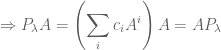
as

A Criterion for a Graph to have Quantum Symmetry
Definition 2.1
Let 


In other words, we don’t have 

Theorem 2.2
Let
, such that
and
, then we get a surjective *-homomorphism
. In this case, we have the quantum group
, and so
Warning: This is written by a non-expert (I know only about finite quantum groups and am beginning to learn my compact quantum groups), and there is no attempt at rigour, or even consistency. Actually the post shows a wanton disregard for reason, and attempts to understand the incomprehensible and intuit the non-intuitive. Speculation would be too weak an adjective.
Groups
A group is a well-established object in the study of mathematics, and for the purposes of this post we can think of a group 

such that 

For example, consider the space 


A set of symmetries 





Note that:

A group can carry additional structure, for example, compact groups carry a topology in which the composition 

Algebra of Functions
Given a group 


Depending on the class of group (e.g. finite, matrix, compact, locally compact, etc.), there may be various choices and considerations for what algebra of functions to consider, but on the whole it is nice if given an algebra of functions
Usually the following transpose maps will be considered in the structure of 



See Section 2.2 to learn more about these maps and the relations between them for the case of the complex valued functions on finite groups.
Quantum Groups
Quantum groups, famously, do not have a single definition in the same way that groups do. All definitions I know about include a coassociative (see Section 2.2) comultiplication 

Here is a non-working (quickly broken?), meta-definition, inspired in the usual way by the famous Gelfand Theorem:
A quantum group
such that:
- whenever
- every commutative algebra of functions satisfying
- whenever commutative algebras of functions
,
as set-of-points groups.
Some notes on this paper.
1. Introduction and Main Results
A tree has no symmetry if its automorphism group is trivial. Erdos and Rényi showed that the probability that a random tree on 

Banica (after Bichon) wrote down with clarity the quantum automorphism group of a graph. It contains the usual automorphism group. When it is larger, the graph is said to have quantum symmetry.
Lupini, Mancinska, and Roberson show that almost all graphs are quantum antisymmetric. I am fairly sure this means that almost all graphs have no quantum symmetry, and furthermore for almost all (as
The paper in question hopes to show that almost all trees have quantum symmetry — but at this point I am not sure if this is saying that the quantum automorphism group is larger than the classical.
2. Preliminaries
2.1 Graphs and Trees
Standard definitions. No multi-edges. Undirected if the edge relation is symmetric. As it is dealing with trees, this paper is concerned with undirected graphs without loops, and identify 
The adjacency matrix of a graph is a matrix 


2.2 Symmetries of Graphs
An automorphism of a graph 


If 
2.3 Compact Matrix Quantum Groups
A compact matrix quantum group is a pair 


,
- There exists a morphism
, such that
are invertible (Timmermann only asks that
be invertible)

The classic example (indeed commutative examples all take this form) is a compact matrix group 

Example 2.3
The algebra of continuous functions on the quantum permutation group 


The map 


2.4 Quantum Symmetries of Graphs
Definition 2.4 (Banica after Bichon)
Let

For me, not the authors, this requires some work. Banica says that 
A Hopf ideal is a closed *-ideal 

Classically, 

The classical version of 


Easiest thing first, is it a *-ideal? Well, take the adjoint of 


3. The Existence of Two Cherries
In this section the authors will show that almost all trees have two cherries. Definition 3.4 says with clarity what a cherry is, here I use an image [credit: www-math.ucdenver.edu]:
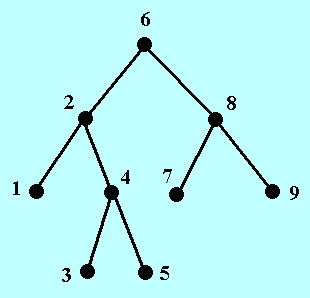
(3,5,4) and (7,9,8) are cherries
Remark 3.2
If a graph admits a cherry 

Theorem 3.3 (Erdos, Réyni)
Almost all trees contains at least one cherry in the sense that
![\displaystyle \lim_{n\rightarrow \infty}\mathbb{P}[C_n\geq 1]=1](https://s0.wp.com/latex.php?latex=%5Cdisplaystyle+%5Clim_%7Bn%5Crightarrow+%5Cinfty%7D%5Cmathbb%7BP%7D%5BC_n%5Cgeq+1%5D%3D1&bg=ffffff&fg=545454&s=0&c=20201002)
where 
Corollary 4.3
Almost all trees have symmetry.
The paper claims in fact that almost all trees have at least two cherries. This will allow some 
Abstract
Necessary and sufficient conditions for a Markov chain to be ergodic are that the chain is irreducible and aperiodic. This result is manifest in the case of random walks on finite groups by a statement about the support of the driving probability: a random walk on a finite group is ergodic if and only if the support is not concentrated on a proper subgroup, nor on a coset of a proper normal subgroup. The study of random walks on finite groups extends naturally to the study of random walks on finite quantum groups, where a state on the algebra of functions plays the role of the driving probability. Necessary and sufficient conditions for ergodicity of a random walk on a finite quantum group are given on the support projection of the driving state.
Link to journal here.
In the hope of gleaning information for the study of aperiodic random walks on (finite) quantum groups, which I am struggling with here, by couching Freslon’s Proposition 3.2, in the language of Fagnola and Pellicer, and in the language of my (failed) attempts (see here, here, and here) to find the necessary and sufficient conditions for a random walk to be aperiodic. It will be necessary to extract the irreducibility and aperiodicity from Freslon’s rather ‘unilateral’ result.
Well… I have an inkling that because dual groups satisfy what I would call the condition of abelianness (under the ‘quantisation’ functor), all (quantum) subgroups are normal… this is probably an obvious thing to write down (although I must search the literature) to ensure it is indeed known (or is untrue?). Edit: Wang had it already, see the last proposition here.
Let 


Recall that the set of probabilities on a finite quantum group is the set of states 


The ‘simplicity’ of the coproduct,

means that for 

so that, inductively, 

The Haar state on

and therefore necessary and sufficient conditions for the convergence of 


Here is a finite version of Freslon’s result which holds for discrete groups.
Freslon’s Ergodic Theorem for (Finite) Group Algebras
Let 
Freslon’s proof passes through the following equivalent condition:
The random walk on
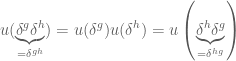
Before looking at the proof proper, we might note what happens when
To every positive definite function 
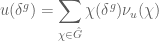
This is Bochner’s Theorem for finite abelian groups. This implies that positive definite functions on finite abelian groups are exactly convex combinations of characters.
Freslon’s condition says that to be not ergodic, ![[G\,:\,H]](https://s0.wp.com/latex.php?latex=%5BG%5C%2C%3A%5C%2CH%5D&bg=ffffff&fg=545454&s=0&c=20201002)
Therefore, if 
For 
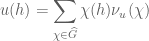
dividing both sides by 

As 


such that 


This, via Pontragin duality, is not looking at the ‘support’ of

gives the same object in as
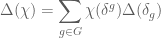

Well… of course this is true because 
We could proceed to look at Fagnola & Pellicer’s work but first let us prove Freslon’s result, hopefully in the finite case the analysis disappears…
Proof: Assume that

There exists a unitary representation 


Cauchy-Schwarz implies that

If 


This implies for 


and so 

I don’t really need to go through the third equivalent condition. If

and so

Now let us look at the language of Fagnola and Pellicer. What is a projection in 

I think periodicity is also wrapped up in Freslon’s result as I think all subgroups of dual groups are normal. Perhaps, oddly, not being concentrated on a subgroup means that the positive function (probability on the dual) is one on that subgroup…
Well… let us start with irreducible. Suppose 


Let us look at the first condition:

What now is the support of 

Now let us tackle aperiodicity. It is going to correspond, I think, with being concentrated on a ‘coset’ of a non-trivial character on
Well, we can show that if 



Now what I want to do is put this in the language of ‘inclusion’ matrices… but the inclusions for cocommutative quantum groups are trivial so no go…
We can reduce Freslon’s conditions down to irreducible and aperiodic: not coinciding with a trivial character, and not coinciding with a character.
In my pursuit of an Ergodic Theorem for Random Walks on (probably finite) Quantum Groups, I have been looking at analogues of Irreducible and Periodic. I have, more or less, got a handle on irreducibility, but I am better at periodicity than aperiodicity.
The question of how to generalise these notions from the (finite) classical to noncommutative world has already been considered in a paper (whose title is the title of this post) of Fagnola and Pellicer. I can use their definition of periodic, and show that the definition of irreducible that I use is equivalent. This post is based largely on that paper.
Introduction
Consider a random walk on a finite group 



The convolution is also implemented by right multiplication by the stochastic operator:

where 



and so the stochastic operator 

The random walk driven by 


![[P^k]_{1\ell}>0](https://s0.wp.com/latex.php?latex=%5BP%5Ek%5D_%7B1%5Cell%7D%3E0&bg=ffffff&fg=545454&s=0&c=20201002)
The period of the random walk is defined by:
![\displaystyle \gcd\left(d\in\mathbb{N}:[P^d]_{11}>0\right)](https://s0.wp.com/latex.php?latex=%5Cdisplaystyle+%5Cgcd%5Cleft%28d%5Cin%5Cmathbb%7BN%7D%3A%5BP%5Ed%5D_%7B11%7D%3E0%5Cright%29&bg=ffffff&fg=545454&s=0&c=20201002)
The random walk is said to be aperiodic if the period of the random walk is one.
These statements have counterparts on the set level.
If 
Moreover, when 



In fact, in this case it is necessarily the case that 


Suppose that 



This shows how the stochastic operator reduces the index
A central component of Fagnola and Pellicer’s paper are results about how the decomposition of a stochastic operator:

specifically the maps 
Stochastic Operators and Operator Algebras
Let 


It can be shown that if 

All hereditary subalgebras are of this form.
In the case of a finite classical group 


exhibits a periodicity because

This shows that a necessary condition for ergodicity of a random walk on a finite classical group
I had hoped that something similar might hold for the case of random walks on finite quantum groups but alas I think I have found a barrier.
Slides of a talk given at Munster Groups 2019, WIT.
Abstract: It is a folklore theorem that necessary and sufficient conditions for a random walk on a finite group to converge in distribution to the uniform distribution – “to random” – are that the driving probability is not concentrated on a proper subgroup nor the coset of a proper normal subgroup. This is the Ergodic Theorem for Random Walks on Finite Groups. In this talk we will outline the rarely written down proof, and explain why, for example, adjacent transpositions can never mix up a deck of cards. From here we will, in a very leisurely and natural fashion, introduce (and motivate the definition of) finite quantum groups, and random walks on them. We will see how the group algebra of a finite group is the algebra of functions on a finite quantum group. Freslon has very recently proved the Ergodic Theorem in this setting, and we present ongoing work towards an Ergodic Theorem in the more general finite quantum group setting; a result that would generalise both the folklore and group algebra Ergodic Theorems.
Introduction
Every finite quantum group has finite dimensional algebra of functions:
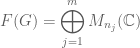
At least one of the factors must be one-dimensional to account for the counit 



Denote by 
In the case of the Kac-Paljutkin and Sekine quantum groups, the convolution powers of pure states exhibit a periodicity of sorts. Recall for these quantum groups that 
In these cases, for pure states of the form 


If we have a pure state 

then 
Inductively all of the 

The question is, do the results above about the image of
To find out we go back and do some sandboxing with the paper of Kac and Paljutkin. Which is a pleasure because that paper is beautiful. The blue stuff is my own scribbling.
Finite Ring Groups
Let

which is a central idempotent.
Lemma 8.1

Proof: If 


If 


It follows that 

Lemma 8.2

Proof: Suppose that 


is a non-null homomorphism from the non-commutative into the commutative.
We see that 


The following says that
Lemma 8.3

Proof: Since 


Lemma 8.4


We have:



as 
The element 

We already know what is going on with the first summand. Denote the second by 

Since the 


for 
At this point Kac and Paljutkin restrict to 
Let the summand 


It does follow from above that each 
Now I am stuck!
This sandbox is going to take from a variety of sources, mostly Shuzhou Wang.
C*-Ideals
Let 






Where we have the product

and the norm is given by:

the quotient 
Consider now elements 


The tensor product 


by the nature of the Tensor Product (

Definition
A WC*-ideal (W for Woronowicz) is a C*-ideal 


Let 

Let 


and so

Note that 


and so by linearity, if

In this way, WC*-ideals generalise functions which vanish on distinguished subgroups. In fact, without checking all the details, I imagine that first isomorphism theorem can show that 


Then 


Recent Comments